Designing Calm Apartments in a Noisy, Humid City
Apartment interior design in Chennai can feel overwhelming. The flat is ready or the old one needs work, you scroll through endless photos, and nothing seems to match your actual floor plan, budget, or city noise. On top of that, every contractor has a different idea, and it is hard to know what is truly possible in an apartment building.
This guide focuses on calm, day-to-day living. Room-by-room, we look at layout, lighting, storage, and acoustics, and how the answers differ for a new handover versus a renovation. We stay practical, keep Chennai's heat and humidity in mind, and focus on things that can genuinely be done inside typical apartment rules and building systems.
Start with the Plan: New Layouts Versus Existing Walls
In Chennai apartments, many things are fixed. The column grid, main beams, shear walls, toilet locations, and service shafts usually cannot move. In older RCC buildings, any thought of breaking a wall needs a structural check, not just a contractor's opinion.
For new homes, before you get possession, it helps to:
- Study the builder floor plan against sun direction and window positions
- Mark where large furniture will go so door swings do not clash
- Ask early for small tweaks like extra electrical points, fan points, or a pocket for a sliding door
- Decide Vastu priorities, if any, so they align with actual room use
For renovations, the plan is more about rethinking without major demolition:
- Use partial partitions or open shelves instead of full walls
- Add sliding or pocket doors to free up space in tight passages
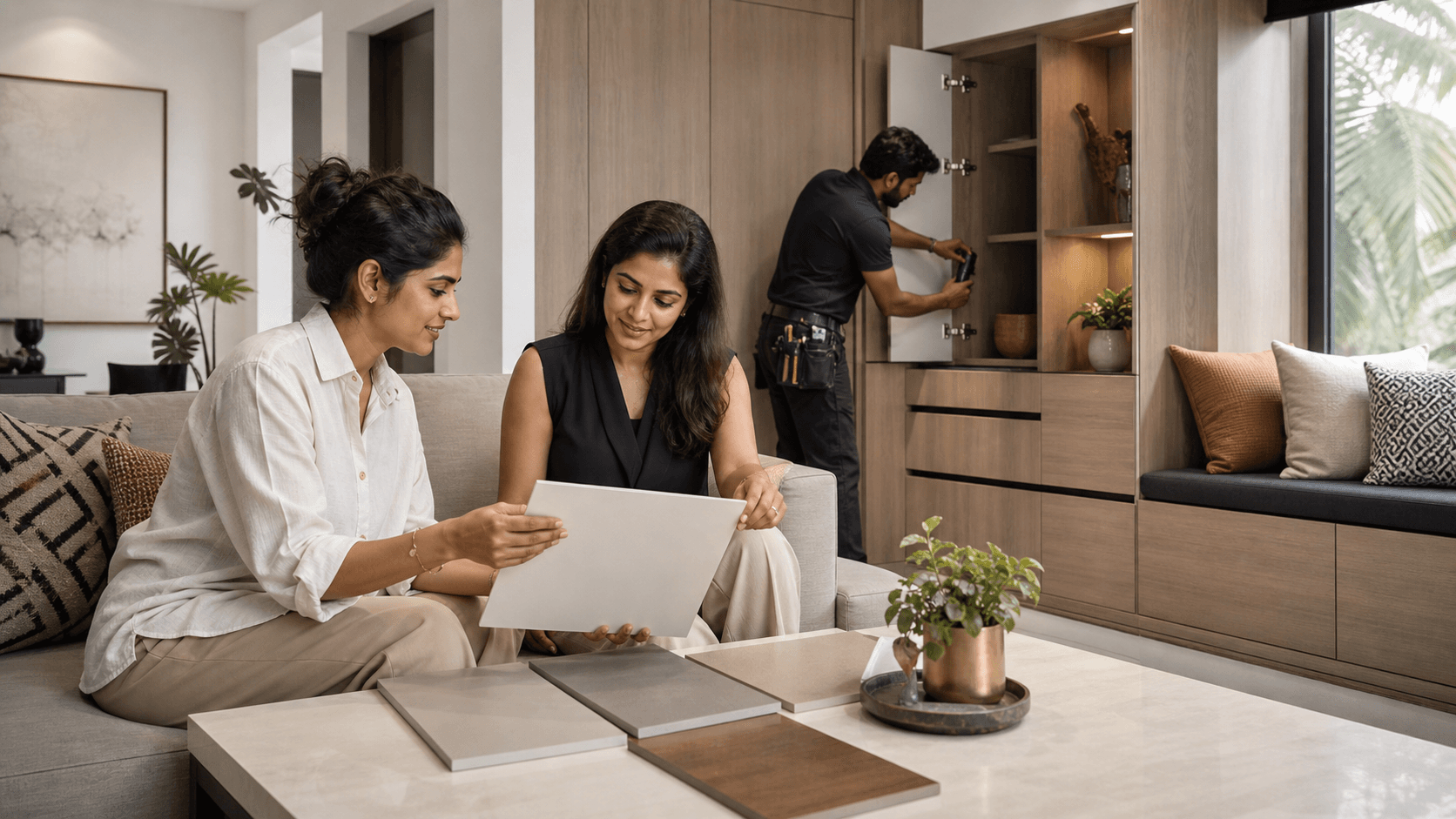
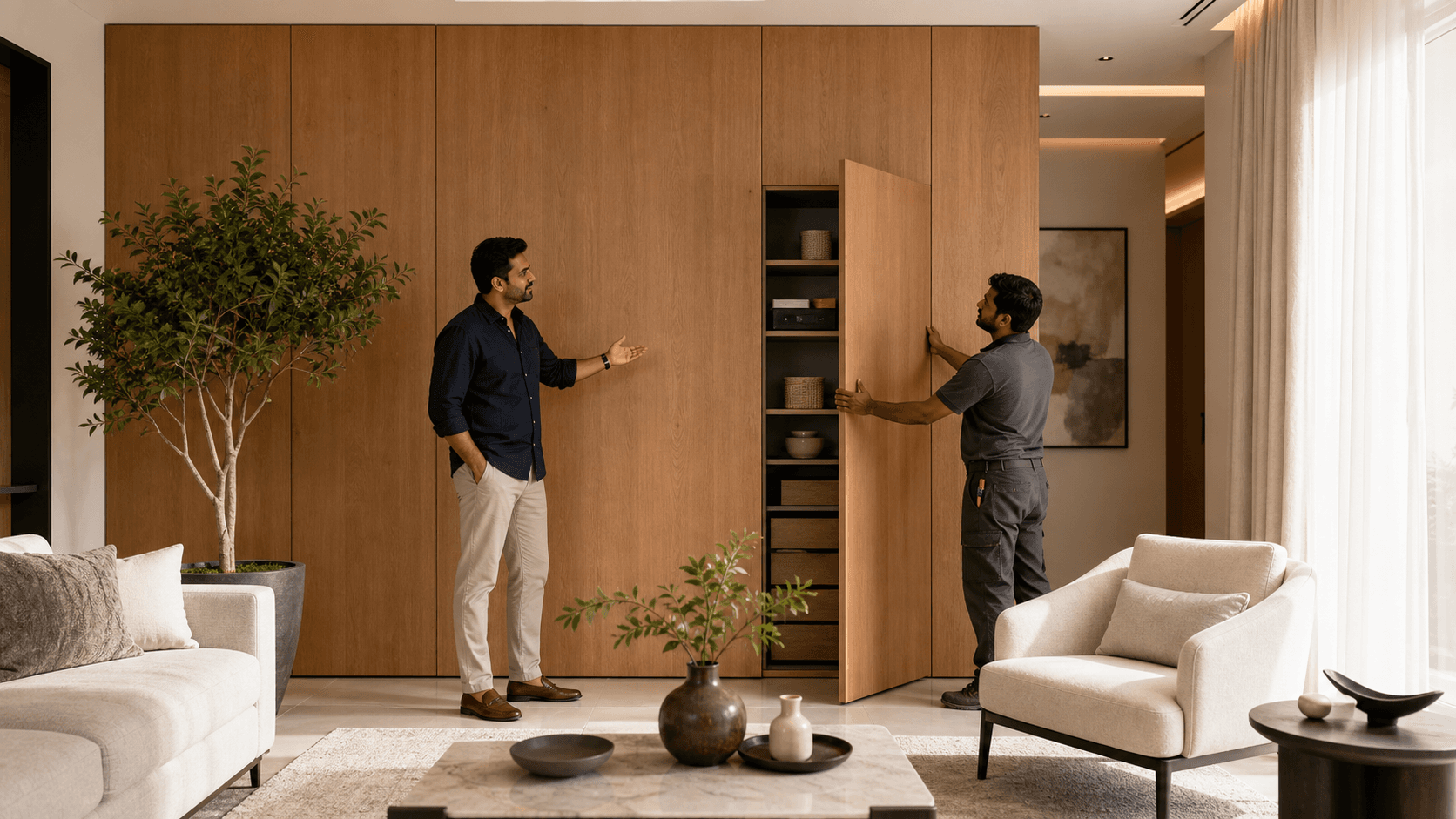
- Use full-height wardrobes or TV units to visually zone areas
- Redirect circulation with furniture placement instead of shifting walls
Effort and disruption grow fast once you touch flooring, plumbing lines, and full-height walls. In lived-in apartments, there is also the cost and time of packing, protection, and working around family routines, so it pays to get the plan right once.
Living Room Calm: Light, Views, and Noise Control
Most Chennai living rooms open to a balcony or French window, facing a street or an internal court. Common issues are hard glare, dust from traffic, and constant background noise. Many are combined with dining, so the space has to do a lot without feeling crowded.
Layout pointers that usually work well:
- Keep the main sofa off the window line to reduce harsh light on faces
- Maintain a clear path from entrance to balcony and kitchen
- Plan a TV wall that hides wires, routers, and boxes behind clean shutters
- Add flexible seating like pouffes or light chairs instead of a second heavy sofa
For lighting, a calm living room uses layers:
- Soft ambient light from coves, ceiling lights, or well-spaced surface fittings
- Focused reading light near the main seat
- Warm white LEDs in the 2,700, 3,000 K range for evening relaxation
- Limited decorative pieces that are easy to clean in our dusty air
On acoustics, you do not need full studio treatment to feel a difference:
- Use double-layer curtains, a sheer plus a thicker fabric
- Choose fabric sofas and add a rug, even a flat one, to cut echo
- Consider padded panels or acoustic artwork behind the sofa or TV
- Seal the main door and bedroom doors carefully to reduce corridor noise
Sea-facing and ECR side apartments often deal with stronger winds, salty air, and harsher afternoon sun. There, we look at sturdier window hardware, good quality gaskets, and sun-control fabrics that can handle constant light without fading.
Bedrooms That Actually Help You Sleep
In many Chennai apartments, the bedroom suffers the most: west-facing heat in the evening, shallow wardrobe niches, and noise from lifts or stairwells. The goal is simple: better sleep and easy daily use, not just pretty headboards.
For layout:
- Keep the bed so that the AC does not blow directly on your face
- Leave comfortable walking space on both sides of the bed where possible
- Match wardrobe depth and door type to room width so doors fully open
- Plan for a study or work corner at the start, not as an afterthought
For lighting:
- Use low-glare ambient lights instead of a single harsh ceiling fixture
- Add bedside lights with switches that you can reach from the bed
- Put dim-out or blackout curtains in east- and west-facing rooms
- Avoid placing bright downlights exactly above the pillow area
For storage, think of everyday Chennai life:
- Allocate fixed spots for iron, extra bedding, and festival wear
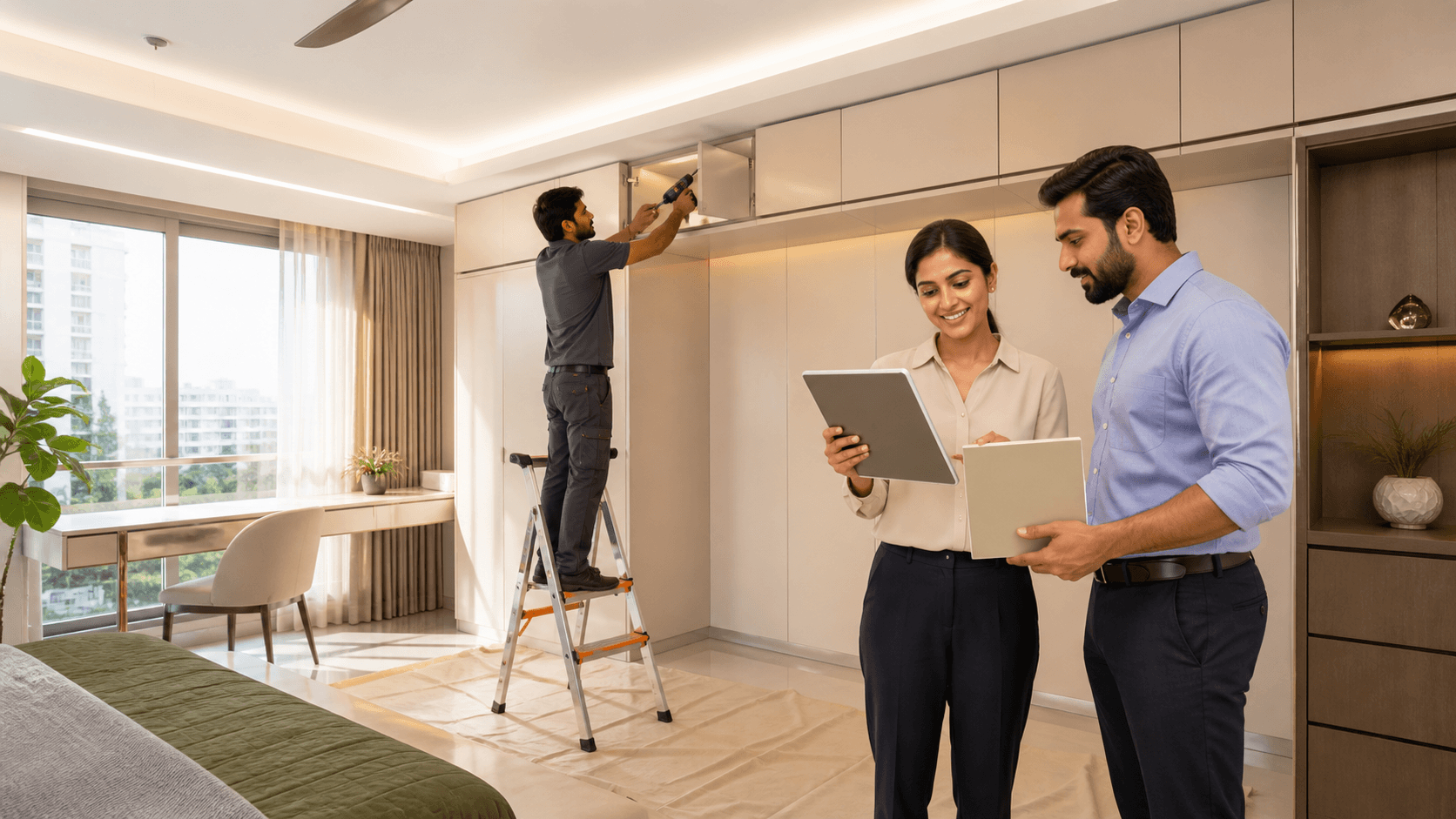
- Use lofts above wardrobes but keep colours and heights balanced so the room does not feel heavy
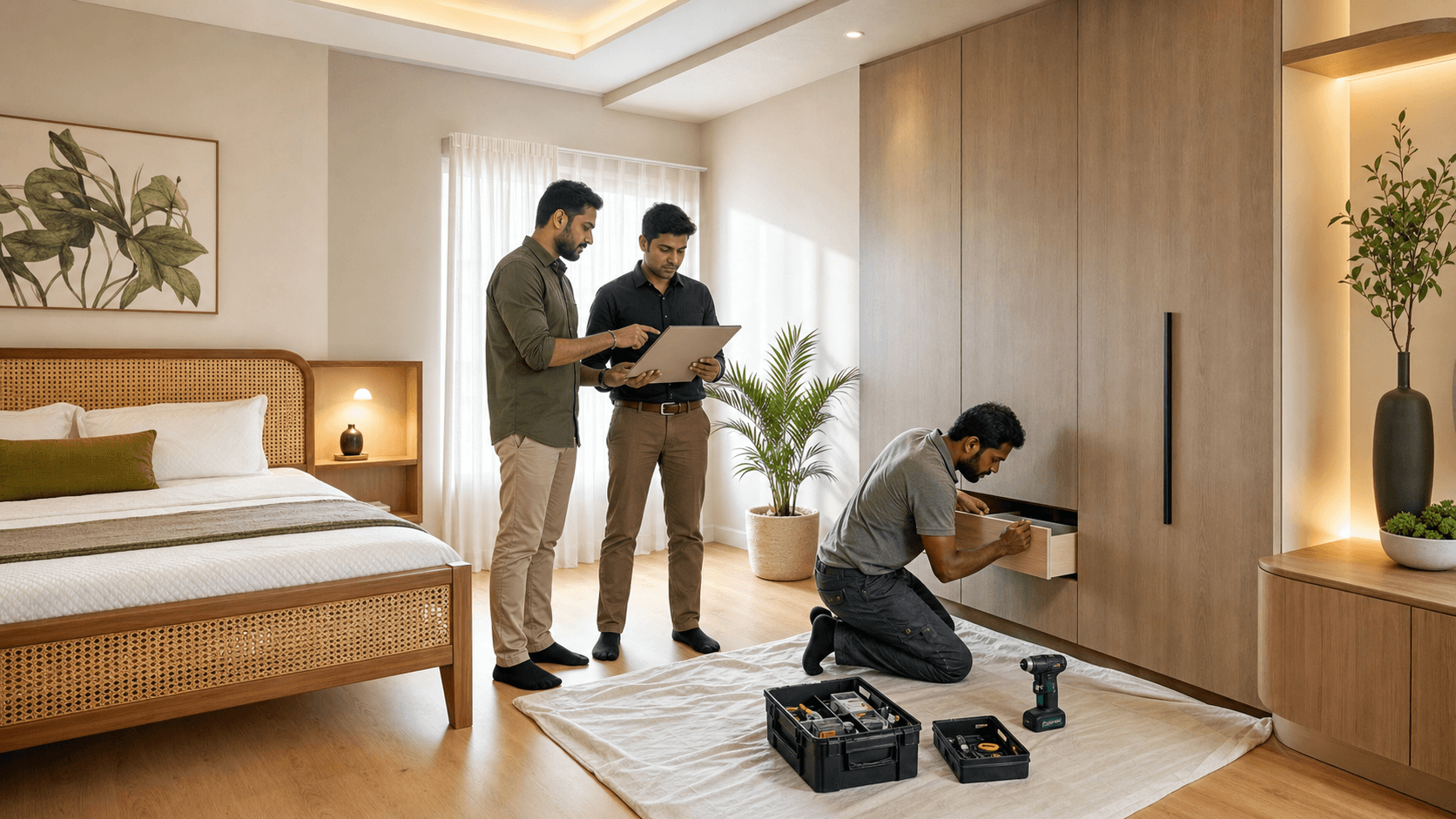
- Choose sliding shutters for tighter rooms, hinged where there is space and you want full access
- Keep space for a secure locker within the wardrobe, planned at the drawing stage
On acoustics and comfort, small steps matter. Slightly denser bedroom doors, consistent hardware, and soft furnishings help cut impact noise. Washing machines, dishwashers, or pumps work better away from bedroom walls when the layout allows.
Kitchens, Bathrooms, Balconies and Everyday Calm
Chennai kitchens deal with heat, steam, and strong cooking smells. In both new and old flats, we focus on clear workflows and materials that handle humidity.
Kitchen layout basics:
- Keep the fridge near the entry, so others can access it without entering the cooking zone
- Ensure the hob, sink, and fridge form a comfortable triangle or simple straight flow
- Provide landing space either side of hob and sink
- Connect kitchen and utility well, especially for washing and drying routines
Lighting and finishes:
- Use task lighting under wall cabinets so the counter is bright, not your eyes
- Maintain good overall light in windowless or shaft-facing kitchens
- Prefer light or mid-tone surfaces that show spills clearly and are simple to clean
Storage and appliances need early thought:
- Tall units or larder units for bulk staples
- Dedicated zones for mixer, wet grinder, and batter containers
- Planned locations for chimney, water purifier, dishwasher, and built-in ovens
Bathrooms and balconies are small but have big impact on how calm a home feels.
Bathroom checklist:
- Separate wet and dry areas with a shower partition where space allows
- Keep major plumbing points close to existing lines in older apartments
- Include closed storage in mirror cabinets or under-counter units
- Use anti-skid tiles that work well with hard water stains and are easy to clean
Lighting and ventilation:
- Bright, shadow-free lighting over the mirror and general area
- Reliable exhaust fans to clear steam in our humid climate
- Good waterproofing and realistic renovation timelines, especially in occupied flats
For balconies:
- Decide whether it is a plant space, coffee corner, or extension of living
- Choose outdoor-friendly tiles and simple, movable furniture
- Add textiles like outdoor rugs or cushions, and planters that subtly break noise
Around late May, many owners start thinking about pre-monsoon showers and the North-East monsoon ahead. It is a good time to check balcony drainage slopes, window seals, and bathroom waterproofing if you are planning a renovation.
Costs, Trade-Offs and Room-by-Room FAQs
One big source of stress in apartment interior design in Chennai is unclear scope. Different vendors may price different materials, skip items like rewiring or false ceiling structure, and not spell out inclusions. That is why detailed lists of work and materials help you compare like for like and decide what truly matters for comfort: light, storage, and noise control usually punch above their cost.
Here are some brief, Chennai-focused FAQs that tie back to the checklists above:
- Is it worth breaking walls in a standard 2BHK flat?
Only if a structural professional confirms it is safe and the gain is clear, for example combining a very small kitchen and living. In many cases, smarter furniture and partial partitions give enough openness without civil work.
- How much natural light is enough in a living room?
If you can read a book near the window in the day without turning on lights, that is usually fine. After that, good artificial lighting design is what keeps the room pleasant in the evening.
- What can I realistically do about road noise on a busy main road?
Better window systems, door seals, layered curtains, and soft furnishings can all reduce the sharpness of sound. Full silence is unlikely, but you can cut the harshness and echo inside.
- Can I reuse builder kitchen cabinets during a renovation?
Sometimes yes, if the carcasses are in good condition and the layout works. Many owners choose to upgrade hardware and shutters while retaining some structure where possible.
- How long does a typical 3BHK interior project take in Chennai?
New, empty flats move faster than occupied ones. Added civil changes, bathroom work, or full electrical upgrades naturally stretch timelines.
- What are must-check items before signing off with the builder?
Check levels of floors and walls, door and window operation, water pressure, basic waterproofing signs in bathrooms and balconies, and the actual positions of electrical points against the plan.
- How do I plan interiors if my handover is in peak monsoon?
Protect materials from moisture, check for seepage early, and allow buffer time for drying of any civil or waterproofing work before fittings and furniture go in.
Turning Checklists Into Calm Decisions for Your Chennai Home
The simplest way to use all this is to walk through your own flat, or the builder floor plan, room by room. For each space, mark four things: layout fixes, lighting needs, storage gaps, and noise or comfort issues. Then split them into must-have and good-to-have so that decisions stay clear when you look at actual quotes and timelines.
Apartment interior design in Chennai does not have to be dramatic to be effective. Quiet, thoughtful choices on walls you keep, lights you add, storage you plan, and sound you soften can make daily life in a dense, noisy city feel far more relaxed for many years.
Transform Your Chennai Apartment Into A Space You Truly Love
If you are ready to reimagine your home with thoughtful layouts, smart storage and finishes that reflect your style, our specialists in apartment interior design in Chennai are here to help. At Interiors by DeX, we collaborate closely with you to understand your lifestyle, budget and priorities before proposing any design. Share your requirements with us and we will guide you through a clear, streamlined process from concept to completion, with regular updates at every stage. To schedule a consultation or ask a question, simply contact us today.