Planning Built-Ins So Your Villa Never Feels Cluttered
Many Chennai villa owners are surprised when a big, open floor plan starts to feel tight once the wardrobes, beds and cabinets arrive. The rooms are large on paper, but after delivery day, circulation gets blocked, light feels reduced and there is furniture touching every wall. A major reason is that most of the pieces are standalone items, bought one by one, without a full plan.
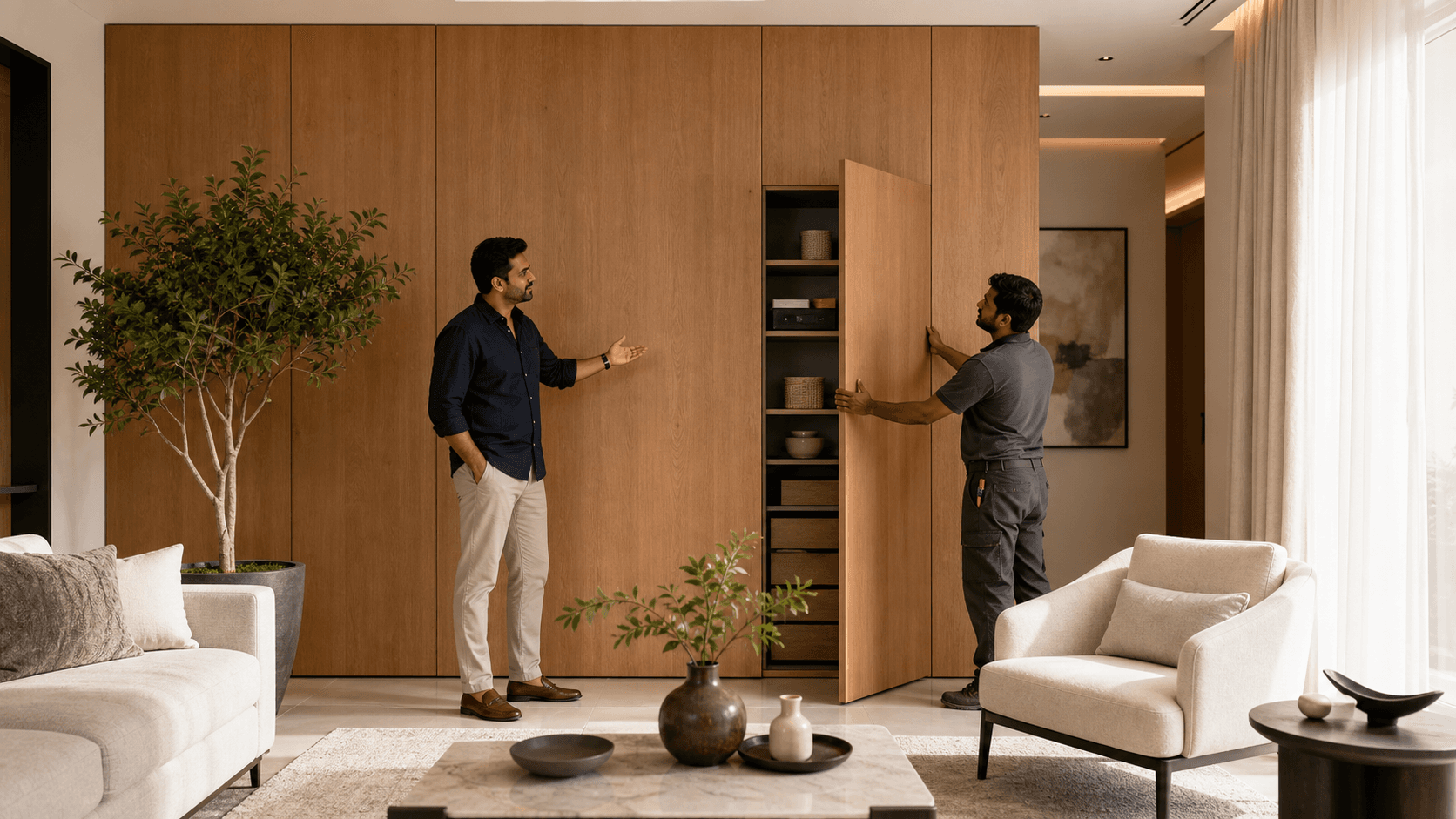
Well-planned built-in furniture in Chennai villas works very differently. Instead of many separate boxes, it creates one clear system that holds storage, display, workspaces, and the TV in a few clean lines. Spaces feel calmer and easier to move through, even with the same amount of storage.
In this guide, we will walk through a simple framework to plan built-ins room by room, how Chennai villa layouts affect decisions, what to expect with planning, and how to avoid surprises with execution, timelines and after-sales, especially in gated communities along OMR, ECR and Oragadam.
How Chennai Villa Layouts Shape Built-In Furniture
Chennai villas often sit on narrow plots in fast-growing suburbs, or on deeper plots along OMR and ECR with split levels and odd corners. We see a few patterns again and again:
- Narrow frontage with long, rectangular living and dining
- Split levels where a half-flight staircase cuts through the main space
- Inward-facing courtyards or double-height voids in premium layouts
Column positions, staircase walls and duct or shaft locations quietly control what you can do with built-ins. For example:
- A staircase side wall might be suitable for a continuous TV plus storage unit
- A duct wall near a bathroom may be better for a full-height wardrobe that hides service lines
- A niche beside a column can turn into a study nook instead of a loose table
Local conditions matter too. High humidity, coastal air in ECR and OMR, and dust from ongoing construction in areas like Sholinganallur, Thaiyur and Navalur all affect material choice and detailing. Carcass boards, edge banding, shutters and hardware need to handle moisture and fine dust without swelling or rusting.
The main point: planning must start from your exact floor plate and site measurements, not from catalog pictures. Built-ins should be aligned early, before electrical, AC and false ceiling points are frozen. This reduces rework, extra cost and disputes later, and is a core part of system-driven interiors with clear accountability on drawings and measurements.
Using Built-Ins To Control Visual Bulk
Visual bulk is what makes a large villa feel crowded. When you have a separate wardrobe, a separate study table, a separate side table and a separate TV console, your eye keeps stopping at edges. The room feels busy even if there is still floor space.
Continuous built-in runs cut this noise. For example:
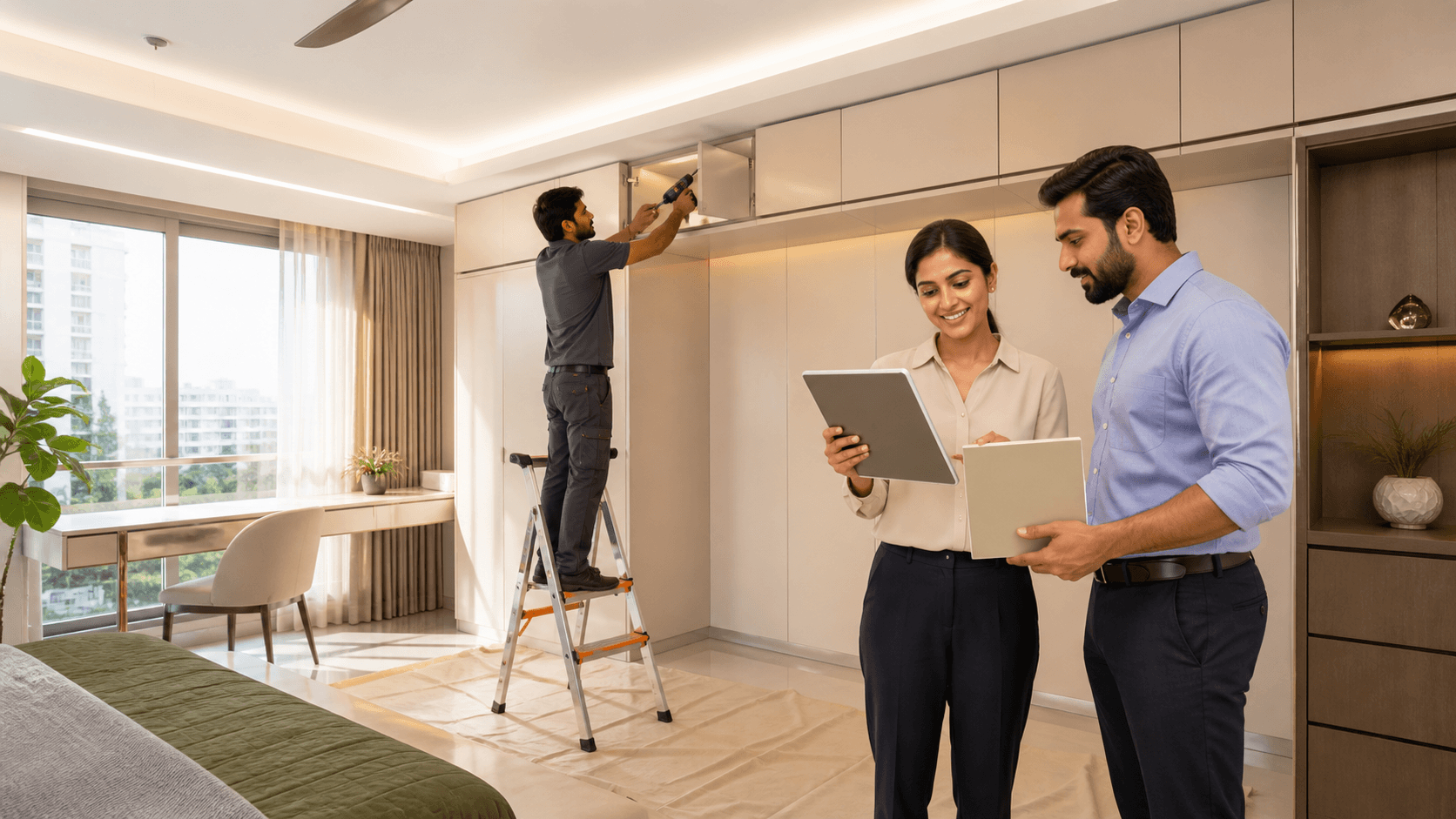
- Wardrobe plus study plus overhead cabinets along one wall in a bedroom
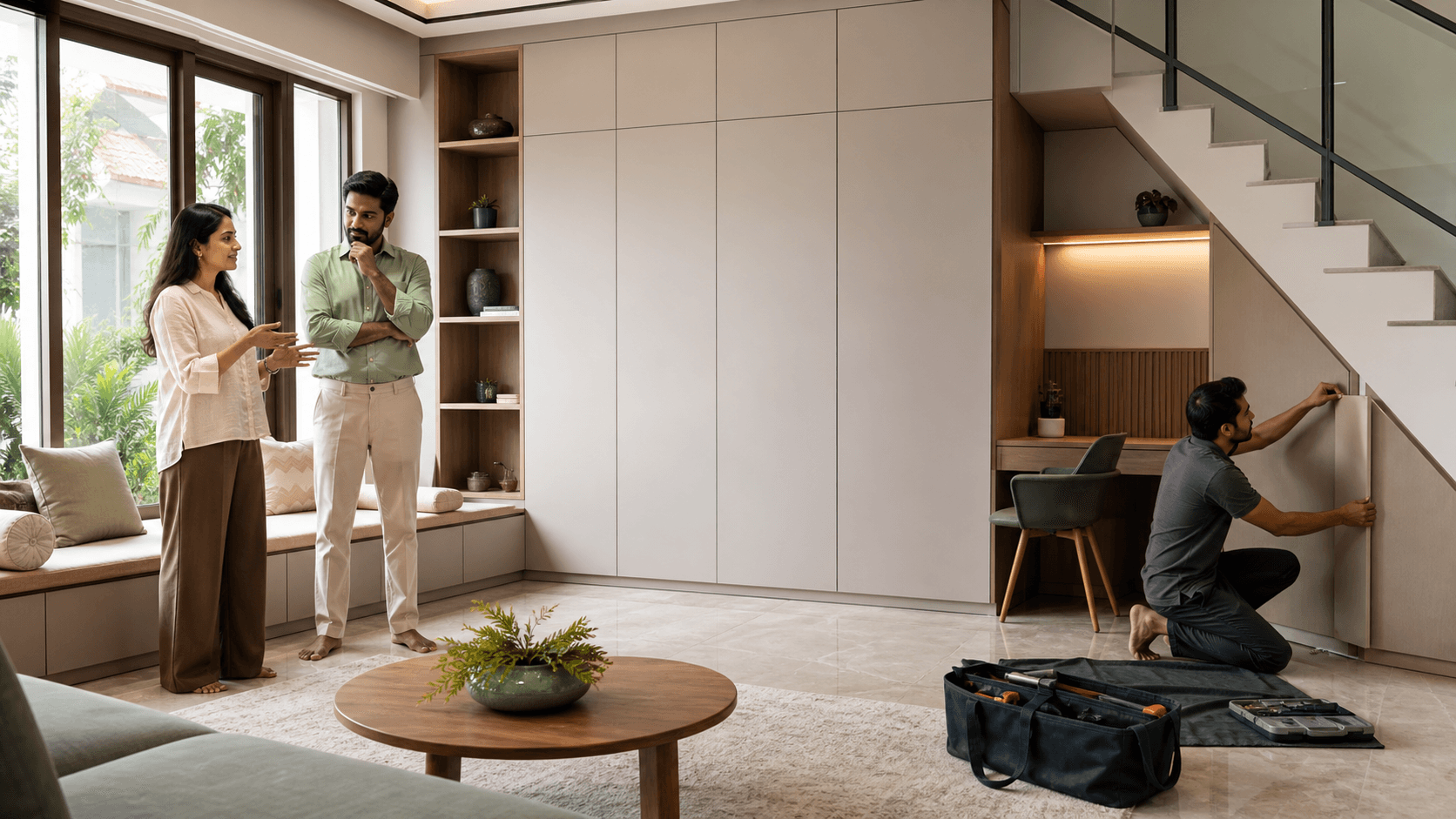
- TV unit plus storage plus display running as one line under the staircase
- Full-height crockery and storage in the dining that also hides column offsets
Tall, flush-to-ceiling wardrobes are especially useful in Chennai villas. They remove the open ledge on top where dust settles, which is a constant issue in coastal and under-construction areas. This reduces cleaning effort and keeps rooms feeling taller and neater.
A system-driven plan measures every piece carefully against the site so gaps are minimal. That reduces awkward filler boxes that eat into walking space or make corners feel clumsy. When lines are clear and continuous, even a compact room in Medavakkam or Perumbakkam can feel open.
Room-by-Room Built-In Planning Framework For Chennai Villas
You can think of villa built-ins in three zones:
- Social zone (living, dining, under-stair)
- Private zone (bedrooms, study)
- Service zone (kitchen, utility, balconies)
Within each zone, the question is the same: what do you need to store, how do you move through the space, and where should the bulk sit so that circulation and light stay clear?
Social Zone: Living and Dining
The living area usually has to handle TV viewing, guests, storage and circulation from main door to staircase or backyard. Built-ins are planned around:
- Main door: leave visual breathing space so you do not walk straight into a cabinet
- Windows and cross-ventilation: avoid blocking air paths, especially with south or west sun
- TV wall: one unit that holds TV, set-top, books and some closed storage, instead of many small units
In the dining, a full-height crockery unit or a compact bar or coffee counter can sit on the wall closest to kitchen, aligned with plumbing and electrical points. The key is not to block the natural path between kitchen, dining and utility.
Under-stair spaces in villas are often wasted. With the right detailing, these corners can hold:
- Closed storage for suitcases or seasonal items
- Utility cabinets for cleaning supplies
- A compact study or work nook if headroom allows
Clear headroom, cleaning access and service access (for electrical or plumbing running below the stairs) should always be accounted for in drawings to avoid later surprises.
Private Zone: Bedrooms
For wardrobes, one wall typically becomes the storage wall. It is usually the least active wall, not blocking windows or bed access. Full-height wardrobes on this wall:
- Free up other walls for movement
- Keep AC indoor unit placement clean
- Allow outdoor AC lines and ducts to be hidden behind or beside the wardrobe zone
On the bed-back wall, combining headboard, side tables, reading lights and maybe slim overhead storage into one built-in unit avoids four or five separate pieces. The room feels calmer and is easier to clean.
In children's rooms, systems that can grow work better than fixed themes. A combined wardrobe, study desk and book storage unit that is neutral in color and layout can adapt as needs change. Planning for future laptop use, hobbies and extra books at the design stage reduces later modifications.
Service Zone: Kitchen, Utility and Balconies
In kitchens, a modular-plus-carcass system usually handles moisture from cooking and monsoon seepage better than ad-hoc carpentry. Factory-finished carcasses and shutters give more control over edges, gaps and finishes, which in turn makes costing and warranty clearer.
Utility spaces do a lot of heavy lifting in Chennai villas. Useful built-ins include:
- Tall broom and cleaning units
- Cabinets framing the washing machine
- Overhead storage for detergents and bulk items
Proper ventilation and water-resistant finishes are important here, especially for villas with semi-covered utility balconies.
Semi-open balconies along ECR and OMR often face strong rain and salt-laden winds. Built-in seating with storage below and weather-resistant shutters on front-facing sides can keep the area usable without frequent replacement of loose furniture.
Materials, Costing, Timelines and Long-Term Care
Materials
For built-in furniture in Chennai, moisture-resistant engineered boards are usually preferred for carcasses, with carefully chosen laminates, veneers or PU for shutters. Lighter colors handle intense sunlight better and show fewer fingerprints. Dark and high-gloss finishes can highlight dust and streaks near windows that get strong sun.
Hardware matters more than many people expect. Soft-close hinges, proper channels for drawers and tested lift-up mechanisms reduce daily irritation and long-term sagging. Just as important is clarity on hardware brands, models and warranty scope, written down so nobody has to rely on memory later.
Costing
A structured costing method helps reduce anxiety and the feeling of being overcharged. Built-ins are usually measured:
- Per running foot for kitchens, TV units and some storage
- Per square foot for wardrobes and lofts
What usually pushes costs up is:
- Special finishes like high-end veneers or complex PU colors
- Non-standard shapes, curves or heavy glass
- Premium hardware add-ons and internal accessories
Layout efficiency by itself does not have to increase cost. Often, a clear plan reduces waste and avoids last-minute additions.
A simple way to view typical villa scope in areas like Thalambur, Perumbakkam or Kelambakkam is:
| Area | Typical Built-In Scope |
|----------|-------------------------------------------------------------------|
| Kitchen | Base and wall units, tall unit if needed |
| Bedrooms | Full-height wardrobes in three bedrooms |
| Living | TV plus storage unit |
| Dining | Crockery and basic bar or service counter |
| Utility | Tall storage and washing machine surround |
Exact numbers always need site measurements and material choices. To keep pricing transparent, an itemized BOQ with per-unit rates, clear inclusions and exclusions, and a payment schedule tied to milestones is essential. This also reduces scope creep and late-stage cost disputes.
Timelines and Execution Accountability
Timelines work best with a clear sequence:
- Design finalization and detailed drawings
- Electrical, plumbing and AC alignment to those drawings
- Site measurements after civil work is stable
- Factory fabrication
- On-site installation and snag corrections
Monsoon rains, community working-hour rules and access inside gated layouts can all affect the calendar. Written timelines, design freeze dates and documented approvals help everyone stay aligned. Clear milestone-based payments linked to these stages give better accountability on both sides.
After-Sales Reliability and Warranty Clarity
In coastal and humid zones, some issues usually appear 6 to 18 months after move-in: small alignment shifts, a hinge that needs tightening, a laminate edge that lifts, or a door that starts to scrape slightly.
These are manageable if:
- Warranty terms are written clearly, with no hidden clauses
- Hardware brands and models are documented
- There is a formal way to log service needs and track closure
Good planning for maintainability starts at the design stage. That means:
- Access to concealed areas like inspection points or shafts
- Standard hardware that can be sourced again in future
- Clear care instructions for daily cleaning and minor adjustments
Three-Checklist Framework Before You Freeze Built-Ins
Before you freeze your built-ins, it helps to review three checklists. This reduces decision fatigue and avoids most late changes.
- Personal Use Checklist
- Number of people who will live in the villa long term
- Storage habits: bulk buying vs minimal stocking
- Work-from-home needs and device storage
- Seasonal items, extra bedding and festival decor
- Technical Checklist
- Floor plan and furniture layout aligned
- Electrical, data and AC points coordinated with built-ins
- Materials, finishes and hardware fixed in writing
- Access to shafts, ducts and service panels kept clear
- Commercial Checklist
- Detailed BOQ with per-unit rates
- Payment schedule tied to clear milestones
- Warranty terms and after-sales process written into the agreement
- Site working hours and society rules factored into the schedule
When built-in furniture is planned as one structured decision instead of many last-minute pieces, the villa feels calmer and more predictable. Storage fits quietly into the architecture, movement flows better, and day-to-day living becomes simpler, even in busy Chennai communities.
FAQs on Built-Ins for Chennai Villas
Q1. Do built-ins always cost more than loose furniture in Chennai villas?
Not necessarily. The per-foot rate of built-ins can be higher than a single loose unit, but a planned system usually replaces several separate pieces and reduces waste. With an itemized BOQ and clear scope, you can see exactly where the money is going and avoid overpaying for unnecessary extras.
Q2. How early should built-in planning start for a new villa on OMR or ECR?
Ideally, before electrical, plumbing and AC points are finalized. Once these are aligned with the built-in drawings, you avoid shifting panels, cutting finished work or adding surface-mounted conduits later.
Q3. Which areas need the most moisture resistance in Chennai?
Kitchens, utilities, bathrooms-adjacent wardrobes and sea-facing balconies need moisture-resistant boards, proper edge banding and hardware that can handle humidity and salt air. This is especially important in coastal stretches and under-construction belts where dust and moisture are constant.
Q4. How can I be sure about warranty and after-sales support?
Ask for written warranty terms covering boards, shutters and hardware, with brand names, duration and what is excluded. Also check if there is a documented service process (how to log a complaint, expected response time and whether visits are chargeable after a certain period).
Q5. What is the typical timeline for villa built-ins once designs are frozen?
It varies by scope, but the main stages are design freeze, services alignment, site measurement, factory work and installation. Factoring in society rules and monsoon, most villa projects need a clearly written schedule with buffers for access and approvals.
A Calm Next Step
If you are planning interiors for a new or recently handed-over villa in Chennai, built-ins are one of the main decisions that affect how the home feels and functions. Taking the time to align layout, materials, costs and warranty in writing will remove most of the uncertainty that usually surrounds interiors.
Whether you work with us or another firm, insist on clear drawings, an itemized BOQ, timeline commitments and documented after-sales support. That structure is what turns interiors from a stressful, open-ended process into a predictable, accountable one.
Get Started With Your Project Today
Transform your home with thoughtfully planned storage and seamless style through our custom designs for built-in furniture in Chennai. At Interiors by DeX, we work closely with you to understand your space, routines, and budget so every detail feels tailored. Share your requirements and let our design team guide you from concept to installation, keeping the process clear and stress-free. If you are ready to discuss your home, simply contact us and we will help you take the next step.