Smart Space Planning for Real OMR Lifestyles
Smart space planning matters a lot in OMR apartments because you are working with tight square footage and busy daily routines. The handover happens, you visit the flat with family, a few vendors come in, everyone gives different advice, and by the end of the day the layout feels more confusing than before. Sofa here, bed there, TV on this wall, wardrobe on that wall, but nothing feels thought through.
Many OMR homeowners also notice that the carpet area feels smaller than the brochure, utility balconies are tight, random columns cut into rooms, and there is a quiet worry about paying for "design" that looks good in a 3D render but is hard to use. Space planning is the foundation that decides storage, movement, light, AC performance, and even how easy your home is to clean for the next decade. When this is handled with a clear system instead of ad hoc carpentry on site, the whole interior process becomes calmer and less stressful.
Why OMR Apartments Need a Different Planning Lens
OMR has its own style of apartments. Many homes are long corridor flats where you enter into a narrow living room, walk past a dining space, and reach a compact kitchen. Bedrooms are often just big enough for a bed and wardrobe, and there may already be builder wardrobes, fixed bathroom shafts, and balcony doors that limit plumbing and wall changes.
On top of that, daily life on the IT corridor is not 9-to-5. There is hybrid work-from-home, late-night calls with headphones on, kids' online classes, and a steady stream of gadgets, chargers, and documents that need a proper home. Good space planning has to respect all of this.
A warm, humid city like Chennai also brings its own planning points:
- Cross ventilation and window use without blocking them with tall units
- AC air throw not blocked by big wardrobes or false ceilings
- Thoughtful spots for drying clothes during rainy days without filling the living room with stands
When space planning services in Chennai take these local details seriously, it becomes much easier to fit in visiting parents, friends staying over, or growing children without the house feeling cramped.
A Clear 4-Step Framework to Plan Any OMR Apartment
A simple framework that works well for OMR apartments is: Measure, Map, Prioritize, Lock. It keeps both the homeowner and the design team aligned and reduces decision fatigue.
- Measure
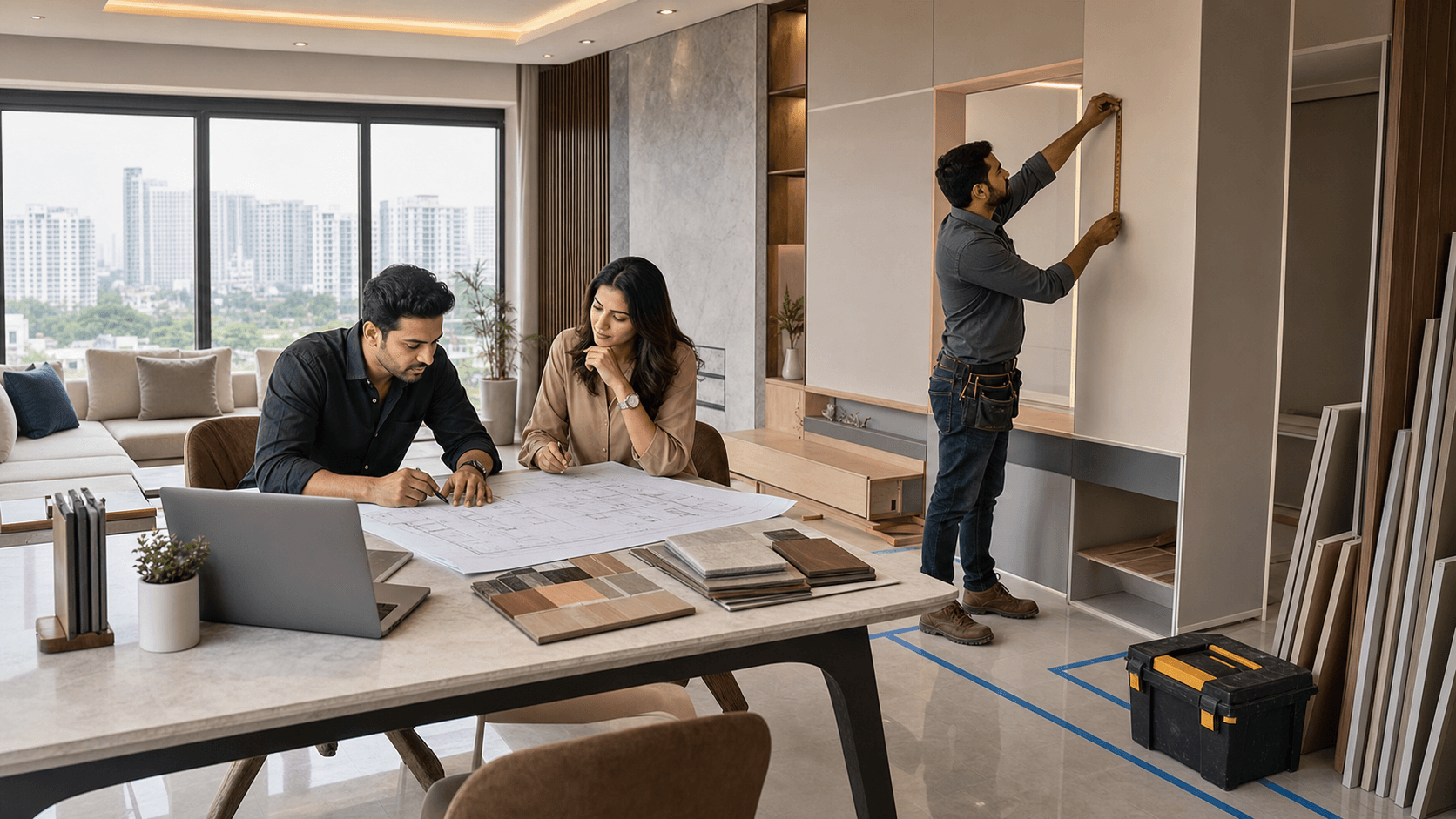
Before any drawings, the actual site should be measured. This means:
- Checking actual room sizes vs brochure
- Measuring beams, columns, and door swings
- Noting window heights and power points
This removes guesswork and weak assumptions.
- Map
Next, map activity zones on a scaled floor plan. Mark where you will:
- Work
- Eat
- Sleep
- Store
- Entertain
- Pray
You quickly see conflicts, like a work table right on the main movement path or a puja zone stuck behind a door.
- Prioritize
Every family's must-haves are different. Use a simple checklist and rank:
- Non-negotiables: workstation, puja, kids' study, parents' room storage
- Nice-to-haves: display shelves, large bar units, oversized TV wall
When both partners are busy in IT, this keeps decisions objective and avoids endless WhatsApp discussions.
- Lock
Only after this should you lock the core layout: kitchen shape, wardrobe positions, bed locations, major storage walls. Finishes, colors, and decor come after. Once the layout is frozen, modular systems can be aligned to it, which reduces on-site improvisation and surprise extras.
System driven interiors in OMR typically follow this kind of sequence so that pricing, timelines, and warranties are all tied to a clear, documented layout.
Room-by-Room Planning for Typical OMR Layouts
Living and Dining
Narrow living rooms are common in OMR. Smart planning here includes:
- Choosing sofa depths that leave walking space to the balcony or main door
- Deciding TV wall first, then routing wires inside the wall instead of chasing it later
- Placing the dining table where it does not block the path to the kitchen
Sometimes a 4-seater dining with a bench works better than a bulky 6-seater that chokes circulation.
Kitchen and Utility
Chennai cooking usually means spices, oil, and many vessels. For compact kitchens, focus on:
- Strong chimney planning and hob location
- Tall storage for extra provisions and heavy vessels
- Work triangle between hob, sink, and fridge, even in a parallel or L-shaped layout
Utility balconies in Chennai must often hold:
- Washing machine
- RO outlet
- Gas bank, where allowed
- Clothes drying
These should not block drainage or windows. Even a simple ceiling-mounted drying system, planned early, keeps this zone usable during monsoon.
Bedrooms and Work Corners
Bedrooms in OMR often have one main wall for the bed, one for the wardrobe, and then a balcony or window. Common mistakes include:
- Sliding wardrobes placed too close to beds so shutters cannot open fully
- Bed sizes chosen without checking door and balcony clearances
Work or study corners for IT professionals and children need:
- Power and data points in the right spot
- No screen glare from windows
- Enough chair movement space between bed and study table
All these influence comfort in Chennai's heat, since poor layouts can trap hot air and make ACs work harder.
Costs, Timelines, Systems, and Common Mistakes
Space planning services in Chennai are usually structured in a few ways, such as per square foot fees, fixed planning packages, or bundled within full turnkey execution. Whatever the model, it is reasonable to expect:
- Site measurements
- Dimensioned 2D layouts for every room
- Basic 3D views if needed
- Clear limits on the number of revisions
To understand what you are getting, it helps to think of three broad approaches:
- Only Carpentry Vendor: free layouts, minimal drawings, many on-site calls, higher chance of rework
- Dedicated Space Planning Service: defined fee, documented layouts, better service coordination
- Turnkey, system-driven firm: integrated design and execution, instant quotations, clearer timelines, and a single point of accountability
For OMR handovers that often bunch up before monsoon, planning needs its own slot. Rushing this stage tends to push costs up later because changes happen after orders are placed.
A system-driven approach uses modular units in standard sizes, known hardware brands, and clear scope documents. This lowers ambiguity for everyone and makes pricing more transparent, with fewer hidden extras during execution.
Warranties also tie back to planning quality. When kitchens and wardrobes are sized and placed correctly, longer modular warranties and early replacement commitments actually work as intended, because products are installed within the conditions they were designed for. Written warranty terms should be clear, with no hidden clauses, so you know exactly what is covered over the next decade and beyond.
Common local planning mistakes seen in OMR and other Chennai micro-markets include:
- Ignoring west sun and ending up with overheated bedrooms and poor AC performance
- Putting all storage on one wall without checking beams and columns, which looks heavy and reduces access
- No proper spot for inverter and Wi-Fi, which leads to messy cables near the entry
Season-linked issues are also easy to miss:
- No indoor drying option during monsoon
- No closed storage for festival decor, guest bedding, or extra vessels
A simple "avoid this, do this instead" discussion with your design team early can prevent most of these. For example, shift a wardrobe away from the AC airflow path, or give the router a small closed niche near the TV wall with planned conduits.
Checklist and Smart Next Steps for Your OMR Apartment
When you speak to any designer or firm, a quick checklist keeps things clear and comparable:
- Do they take independent site measurements?
- Will you receive dimensioned 2D plans for every room?
- How many layout options and revisions are included?
- Are electrical and lighting points aligned with the final furniture plan?
- Is the pricing model transparent, without hidden "design" or "execution" surprises?
- Are product brands for boards, hinges, and hardware named upfront?
- What is the written warranty and are exclusions clearly listed, especially for modular products with longer coverage periods?
- How fast is after-sales response, and is there a clear process (for example, 24-hour acknowledgement and tracking) for service calls?
This is not about pushing you toward any one provider. It is simply a tool so you can compare service quality on equal terms and feel confident before paying any retainers.
A calm way to start is to walk through your empty OMR apartment with a printed floor plan. Mark where you see yourself working, relaxing, praying, and storing things. Write down five non-negotiables and five flexible items for every room. Then shortlist a couple of Chennai-based firms that can give you system-driven, turnkey planning with transparent pricing, clear warranties on modular products, and documented layouts.
The more your interior process is built on clarity around layouts, costs, timelines, and after-sales, the less it feels like a leap of faith and the more it feels like a reliable project you can plan your life around.
Transform Your Layout Into A Functional, Beautiful Space Today
If your home or office layout feels awkward or underused, we are ready to help you rethink it from the ground up. Explore our specialized space planning services in Chennai to create rooms that work better for your daily life and reflect your style. At Interiors by DeX, we collaborate closely with you so every square foot has a clear purpose and a cohesive look. If you are ready to move forward, simply contact us and we will guide you through the next steps.