Why Bathroom Renovations in Chennai Feel Risky
Bathroom renovation in Chennai often starts with excitement and quickly turns into worry. Once the tiles are off, costs shift, new problems appear, and it can feel like there is no clear end date. Even organised homeowners with spreadsheets and mood boards can feel lost when the work actually starts because scope, pricing and timelines are rarely written down in full.
Local conditions do not make it easier. Many apartments have small bathrooms with awkward doors and builder-grade fittings. Hard water, coastal humidity, tricky drainage in OMR and ECR projects and shared shafts in high-rises all add layers of risk. When planning is loose, these details show up later as leaks, damp patches, scope creep and surprise bills.
From what we see in Chennai homes, the main problem is not the tile colour or brand of tap. It is missing planning discipline: unclear scope, missing technical checks, no written cost structure and no agreed escalation path. When interiors are system-driven, with clear timelines, defined inclusions, written pricing assumptions and sensible guarantees, the anxiety drops and decisions become simpler.
---
Hidden Technical Decisions That Matter More Than Tiles
Many Chennai homeowners start with tile catalogues and tap designs. The trouble is, a stylish rain shower is useless if the plumbing behind it is not planned correctly.
On plumbing layout and water pressure, it helps to check:
- Existing lines and their condition
- Actual water pressure on each floor
- Source mix, such as borewell and metro water
In higher floors, pressure is often low. A heavy rain shower or multiple concealed diverters might never perform as expected without booster planning. Add hard water to that and you can end up with partially blocked lines and frequent plumber visits, even with premium fittings.
Waterproofing and leakage control quietly decide whether your bathroom will stay worry-free. The key details are:
- Quality and type of waterproofing membrane
- Proper slope towards the drain, especially in shower areas
- Joint treatment around pipes, floor traps and door thresholds
Common trouble spots in Chennai include walls along common ducts, bathrooms that sit above another flat's false ceiling and older slabs with past leakage history. Doing waterproofing correctly once, with clear notes on what is covered if it fails and for how long, usually costs less than chasing damp patches for years.
Ventilation is another hidden hero in our coastal, humid climate. Small internal baths in OMR apartments often depend only on a small exhaust fan or a slightly open door. Poor planning here can show up as flaky paint on the other side of the wall, black grout lines, rusting hardware and swollen doors. It is smarter to plan:
- Correct exhaust fan capacity and placement
- Window height and size where possible
- Door gaps and air movement paths
- Options like inline exhausts or moisture-tolerant paints
Small upgrades decided early are far better than repainting and regrouting every monsoon.
---
Where Chennai Bathroom Budgets Go Off Track
Many homeowners think tiles and fittings are the main cost. In reality, the heavier part usually sits in the work behind the finishes. When that work is not itemised, pricing feels unpredictable.
The big cost drivers are:
- Civil work, such as dismantling, floor levelling, tiling
- Plumbing changes, especially shifting points
- Electrical upgrades and safety measures
- Fixtures such as sanitaryware, taps, shower systems
- Accessories such as mirrors, shelves and grab bars
Budgets jump when major plumbing points are shifted, full-height tiling is chosen instead of partial walls or concealed systems are preferred over exposed ones. Trying to save by picking the cheapest tiles but cutting corners on skilled labour or waterproofing can lead to expensive rework later. Low-grade fittings that react badly to hard water often need replacement in just a few years.
A simple, transparent structure for Chennai homes can look like this:
| Scenario | Typical Size & Scope | Key Cost Drivers (Indicative, not a quote) |
|---|---|---|
| Compact apartment bathroom | ~6 x 8 ft; full dismantling, basic plumbing corrections, waterproofing, floor & wall tiling, standard false ceiling | Labour-intensive civil work, waterproofing system, mid-range sanitaryware & fittings, basic shower partition |
| Larger villa bathroom | Bigger floor area; more walls and plumbing points; often more complex lighting and storage | Additional tiling area, more points for plumbing and electricals, premium mixers, larger shower zones or bathtub, extra accessories and storage units |
On top of this, there are items that often do not get discussed up front, like:
- Debris removal charges and lift protection rules
- Access into shafts and any building-specific fees
- Core cutting for new lines
- Additional coats of waterproofing if old slabs are weak
The real enemy is not a higher or lower budget, it is vague scope. When every line item and assumption is written down, with clear inclusions, exclusions and rate change rules, pricing becomes predictable and both sides know what is included. This is the simplest way to avoid feeling overcharged or misled later.
---
Planning Space, Storage And Safety For Chennai Homes
Space planning in Chennai bathrooms has to be realistic. Many builder plans give narrow widths, doors that hit the WC and windows right above the toilet. Before thinking of special fittings, it helps to decide if the bathroom should be:
- Linear, with all fixtures along one wall
- L-shaped, for a small but separate shower zone
- Split into wet and dry areas with a screen or low curb
Keeping existing plumbing walls where possible can save both time and money while still improving comfort. Sometimes a simple change in door swing and fixture order can transform usage without large civil work.
Storage is another area where local habits and humidity matter. Buckets, mugs, floor wipers, cleaning liquids and spare RO water cans all need a home. Good planning looks at:
- Vanity units sized for real daily use
- Niches inside the shower instead of wire caddies
- Tall units in moisture-resistant materials with proper edge banding
- Hardware and hinges suited for humid, hard water environments
System-driven modular vanities with clear replacement terms on boards and hardware can reduce long-term worry about swelling or rust.
Safety and everyday ease are just as important, especially for homes with children or elderly parents. Thoughtful choices include:
- Non-slip tiles with a practical surface, not too shiny
- Grab bars near the WC and in shower areas
- Shower screens and thresholds that also work when people use buckets
- Planned electrical points for geysers, mirror lights, shaver sockets and future upgrades like instant heaters
These are small decisions, but they change how relaxed the bathroom feels each day, and they are best taken on drawings rather than on-site.
---
Approvals, Timelines And Monsoon Realities
Many first-time renovators in gated communities are surprised by society rules. Work hours, lift padding, debris movement, water shut-down slots and neighbour approvals can shrink the actual working day to just a few hours.
To keep timelines realistic, it helps to pay attention to:
- Society permissions and notice periods
- Clear method statements and basic drawings for committee review
- Planned days for noisy work, such as breaking and core cutting
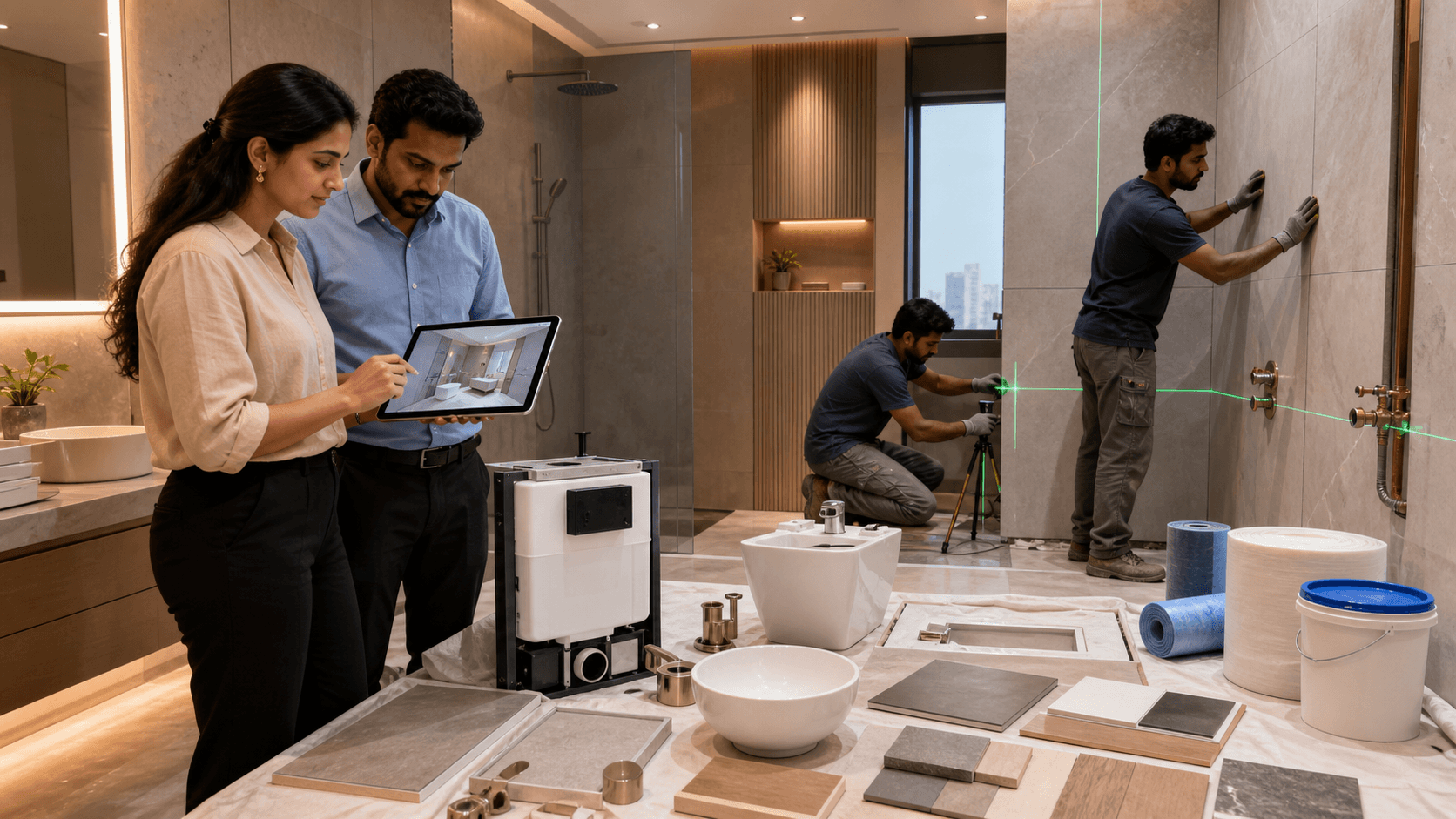
Sequencing is also critical. A sensible order is dismantling, plumbing, waterproofing, testing, tiling, false ceiling, fixtures, glass, then accessories. Skipping water tests before tiling or rushing to install glass too early often leads to rework. For homes with two or three bathrooms, coordinated planning can keep at least one in working condition most of the time.
Chennai's heat and humidity, along with the monsoon, affect curing times for waterproofing and tile adhesives. Rushing this part just to save a few days often pushes problems into the future. It is better to plan with buffer days and a written schedule with key milestones, rather than depend only on verbal promises.
---
A Simple Checklist Before Saying Yes To Any Bathroom Quote
Before committing to any bathroom renovation in Chennai, a structured checklist can reduce uncertainty:
Technical clarity
- Is there a plumbing and electrical layout drawing?
- Has existing water pressure been checked and documented?
- Is the waterproofing system specified by brand and method?
- Are ventilation and exhaust options clearly shown?
Financial transparency
- Is there a detailed BOQ with clear inclusions and exclusions?
- Are brands and model names for key fittings listed?
- Are building-related charges (debris, lift padding, shaft access) mentioned?
- Are rules for variations and extra work written down before work starts?
Execution and after-sales responsibility
- Is there a timeline with logical milestones and site access assumptions?
- Who is accountable if issues appear after handover, and for how long?
- Are waterproofing and modular elements covered by written warranties with no hidden clauses?
- Is there a clear escalation path if something goes off track?
Clear drawings and simple 3D views are useful even for small bathrooms because they reduce on-site arguments and last-minute changes. They also help families along OMR, ECR or in city apartments align on decisions early and avoid decision fatigue later.
A structured interior partner should offer documented scope, transparent pricing, transparent change handling, clear escalation paths and written service or replacement obligations. When modular elements come with straightforward guarantees, including replacement on modular products without hidden conditions, the bathroom stops feeling like a risk and starts feeling like a managed project.
As a Chennai-based team, we built Interiors by DeX around this kind of clarity: system-driven interiors, predictable timelines and accountable execution. If you are planning a bathroom renovation in Chennai and want the process to feel calm and predictable, the next step is simple: get your current bathroom evaluated, have the scope and costs broken into clear line items, and then decide at your own pace with the full picture in front of you.
Transform Your Bathroom Into A Space You Truly Enjoy
If you are ready to upgrade your daily routine, our expert team can guide you through every step of your bathroom renovation in Chennai. At Interiors by DeX, we focus on thoughtful design, quality materials and careful execution so your new bathroom feels both beautiful and practical. Share your ideas and constraints with us, and we will propose a clear, tailored plan that fits your home and budget; simply contact us to get started.