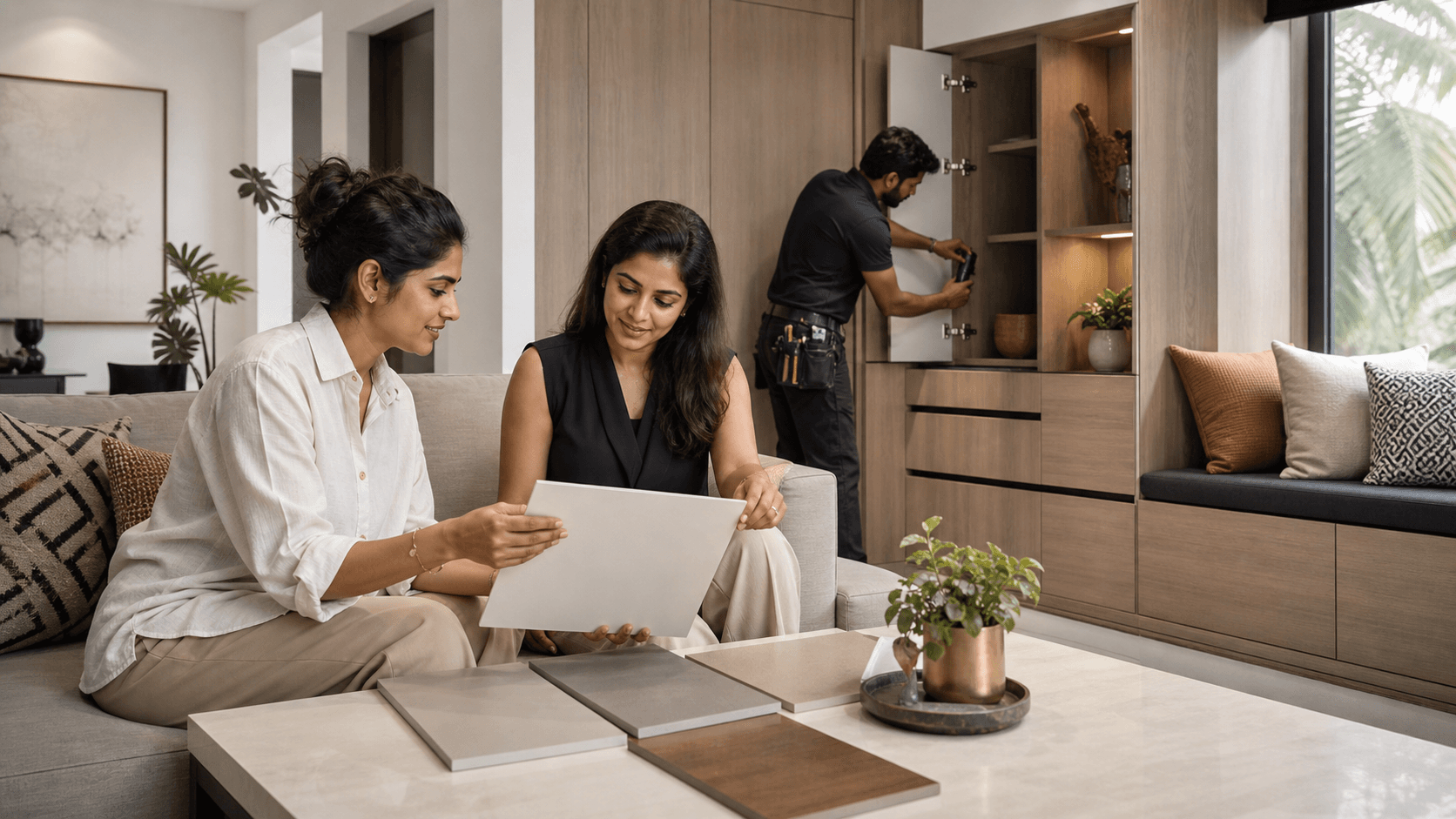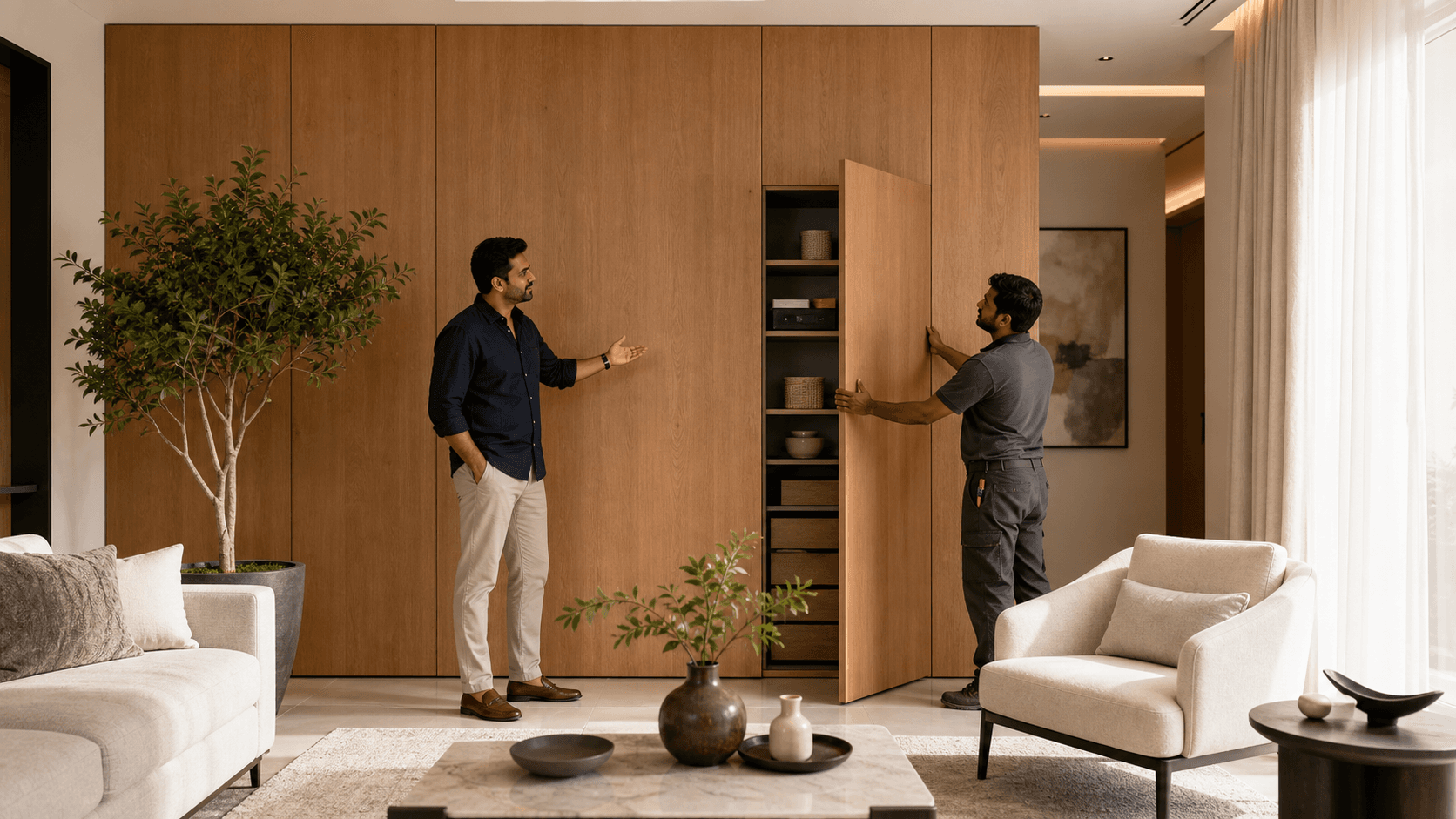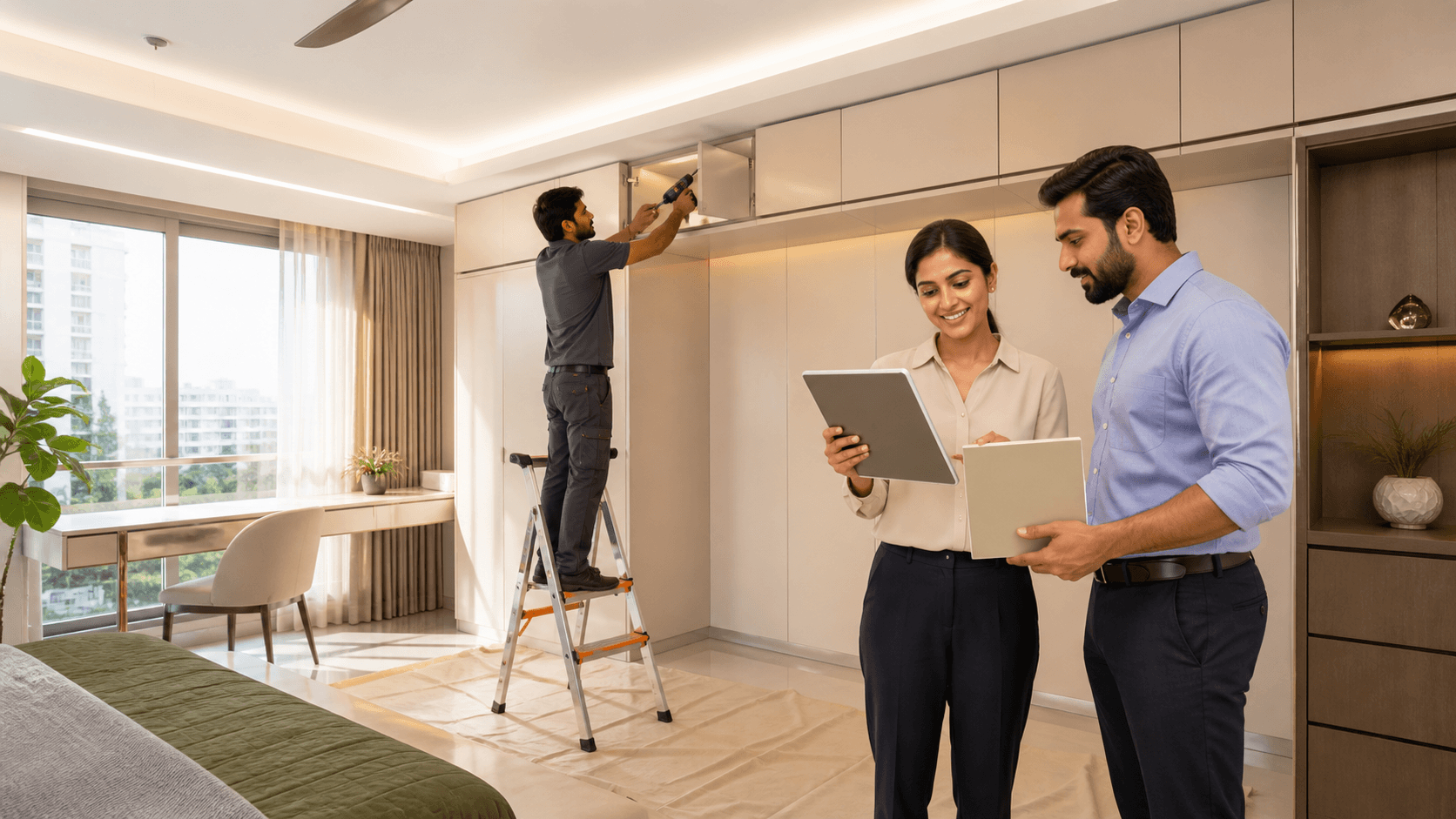
Apartment interior design in Chennai often feels confusing the first time you go through it. You hear different timelines, different material names, and very different opinions on what is "standard". It is hard to know what is reasonable, what is optional, and what might cause trouble later.
We work with many first-time apartment owners in Chennai and the pattern is usually the same. People worry about delays, surprise add-ons, and dealing with too many vendors. In this guide, we will walk through what you can realistically expect from apartment interior design in Chennai, from first meeting to post-handover support, and give you a sense of typical cost patterns.
What First-Time Apartment Owners Really Worry About
Most new homeowners are not scared of choosing colours or handles. They are worried about things going wrong behind the scenes.
Common concerns include:
- Timelines slipping without clear reasons
- Pricing that keeps changing once work starts
- Very little clarity on which materials are actually used
- Juggling separate designers, carpenters, electricians, and AC teams
These are all valid worries. A good interior process should calm these down with clear steps, written plans, and a single point of control.
How Apartment Interior Design in Chennai Typically Starts
There are three usual starting points for apartment interior design in Chennai:
- Before key handover, using builder drawings and site visits through the builder
- At the time of handover, once you get full access to the flat
- After living in the flat for a few months and understanding how you really use the space
In a first consultation, the focus should be on your real life, not just looks:
- Family size and age groups
- Storage habits, including long-term storage
- Cooking style and kitchen usage
- Vastu preferences, where important to you
- Ventilation, daylight, and heat gain in each room
- A realistic budget band, so the design matches your comfort level
Good discovery in Chennai also means visiting the site with a local lens, such as checking:
- Heat and direct sun in west-facing rooms
- Noise from main roads, schools, or common areas
- Building rules about working hours, lift use, and material loading
- How monsoon water behaves around balconies and utility areas
- Backup power setups and safe load planning for appliances
Understanding Design Scope for Chennai Apartments
For a typical 2BHK or 3BHK apartment in Chennai, the design scope usually falls into these buckets:
- Space planning and furniture layout
- Carpentry for kitchen, wardrobes, lofts, TV units, and other storage
- Lighting layout and basic fixtures planning
- Loose furniture planning, even if you buy some pieces separately
- Wall finishes like paint, laminate panels, or simple feature walls
- Basic civil changes, only if the builder and association allow
What is usually included:
- Modular or semi-modular kitchen and core wardrobes
- Key storage like crockery, TV unit, study tables, and shoe racks
- Basic false ceiling in select areas like living and passage
- Electrical point shifting within reason
What may be treated as add-ons or kept outside scope:
- Full flat false ceiling with multiple layers
- Full electrical rewiring or heavy load changes
- MS grills, safety doors, and window grills
- Balcony enclosures or heavy balcony framing
- Glass shower partitions and some bathroom fittings
Practical limits in apartments matter a lot: shafts, beams, and builder tiles fix many decisions. For example, you often cannot move toilet locations or break structural walls. Association rules also restrict loud work, water lines, and external facade changes.
What Drives Cost in Apartment Interior Design in Chennai
Even before final numbers are shared, it helps to know what usually pushes budgets up or down. Key cost drivers are:
- Flat size and the number of rooms you want to fully fit out
- How much built-in storage you expect in each room
- Material choices for shutters, such as laminate, membrane, or acrylic
- Hardware quality for hinges, channels, and lift-up systems
- Special carpentry like curved units, fluted panels, or beds with complex storage
For many first-time apartment owners in Chennai, a basic but well-built interior typically starts in a broad per-square-foot band, and then moves up or down based on finishes and storage density. Instead of chasing a single "rate", it is more practical to look at how money is distributed across rooms and categories.
A simple way to view this is room-wise, for guidance:
Area
Typical inclusions (basic, well-built)
Typical cost increasers
Kitchen
Base & wall units, basic tall unit, laminate finish, standard hardware
Premium shutters (acrylic, membrane), internal accessories, built-in appliances
Bedrooms
Wardrobes with lofts, simple study or dresser where needed
Sliding systems, glass shutters, detailed internal partitions
Living / Dining
TV unit, shoe rack, basic false ceiling in select zones
Full ceiling design, wall panelling, extensive feature walls
Bathrooms & Utility
Basic under-counter storage where feasible
Glass partitions, niche work, extensive tiling changes (if allowed)
In Chennai, seasonal timing also affects workflow. For example, starting in June means working around:
- Higher humidity during monsoon that slows paint drying
- Extra care for storing plywood and laminates away from dampness
- Slight scheduling shifts if labour movement is affected by heavy rain
A transparent partner will usually show a room-wise or area-wise table that breaks down what you are paying for, in clear language, not just material codes.
From Design to Execution in a Turnkey Model
In a turnkey model, one firm takes design and execution together. A clear process typically looks like this:
- Requirement gathering and site study
- Concept layouts in 2D to finalise room functions and circulation
- 3D views for key spaces, where helpful for clarity
- Detailed drawings and a Bill of Quantities that lists each item and material
- Final approval and a single contract that covers design and execution
On site, the work usually follows a logical sequence:
- Marking and confirmation of electrical and plumbing points
- Any allowed civil work or minor brickwork
- False ceiling and basic painting
- Factory production of cabinets, then installation
- Fitting shutters, hardware, and final finishing
- Final painting touch-ups, cleaning, and snag rectification
Timelines depend on apartment size, scope, and building rules. Common reasons for delays are:
- Lift restrictions and limited material movement slots
- Waiting for special materials or hardware
- Association permissions for noisy work
- Festival periods when labour availability changes
Materials, Durability, and Chennai's Coastal Climate
Chennai's heat and humidity are not kind to weak materials. For most apartments, it is practical to work with:
- Plywood as the main core for kitchens and wardrobes
- MDF only where suitable, such as some shutters or panels
- Laminates for practical, easy-clean finishes
- Proper edge-banding to seal panel edges
- Hardware in different quality ranges for drawers and doors
Coastal air, humidity, and strong sun affect:
- Kitchen carcasses, which must handle steam and cleaning
- Hinges and channels, which should resist rust and sagging
- Finishes, where very glossy or dark colours may show fingerprints and minor wear more easily
Window treatments and balcony use also need thought:
- Planning clothes drying that does not soak your wardrobe area
- Keeping wooden elements away from direct water exposure
- Using practical finishes where kids or pets use balconies and utility areas a lot
Clarity on Contracts, Payments, Warranties, and Support
A clear turnkey contract should spell out:
- Scope of work, broken down by room and item
- Material specifications and agreed finish types
- Tentative timelines with buffers
- Payment milestones tied to clear stages
- Variation policies if you add or change items midway
- Handover format and documentation
Payment structures often follow stages such as:
- Initial booking to start design work
- After design sign-off and before production
- At site start when execution begins
- Mid-stage when major installations finish
- Before final handover, after snag corrections are agreed
Warranty expectations should be realistic and written down, for example:
- Hardware warranties as per brand terms
- Coverage for modular components and on-site carpentry for a limited period
- A basic service window to handle minor settling issues and adjustments
After handover, a good firm will run a snag process, fix minor issues, and handle a short settling-in period in a structured way. The key difference between real post-handover support and casual promises is simple: there is a defined way to raise service requests and track them, not just phone calls to whoever is free that day. At Interiors by DeX in Chennai, this is handled through documented materials, a clear snag list, and a simple support method that new homeowners can follow.
FAQ: Practical Questions Chennai Apartment Owners Ask
Q1. How long does 2BHK or 3BHK interior design in Chennai take?
Timelines vary with scope, building rules, and design changes. A clear partner will state a practical range for your flat type and keep you updated if site factors shift that plan.
Q2. Is it better to start design before or after handover?
Starting design before handover, based on builder drawings and limited access, can save time. Actual work on site usually begins only after full handover, once exact sizes and site conditions are confirmed.
Q3. Starting budget for basic, well-built interiors in Chennai?
Instead of fixing on a single figure, most first-time owners in Chennai find it useful to decide which rooms must be completed before move-in (typically kitchen and main bedrooms), then work out a room-wise scope and budget. Your designer can then show you options within that band, with clear trade-offs between materials and storage.
Q4. Can I phase work room by room, or do it all at once?
Phasing is possible but may lead to repeated disturbance, extra coordination, and longer overall timelines. Doing core items together, especially kitchen and main storage, usually works better for most apartment owners.
Q5. How do I coordinate interiors with AC, grills, and curtains?
This is usually handled through a simple sequence plan. Your interior partner should share when to bring in AC, grill, and curtain vendors, and show where their work touches carpentry or electrical layouts.
Q6. DeX vs freelancers: turnkey apartment interiors in Chennai
With a turnkey approach, design, drawings, and execution stay under one roof, with a single point of responsibility. For most first-time homeowners, this reduces coordination effort and helps keep scope, timelines, and quality aligned from start to finish.
Next Steps for Chennai Apartment Owners
If you are planning interiors for a new apartment in Chennai, the practical starting point is to:
- List the rooms you must complete before moving in
- Note any non-negotiables (storage, Vastu, appliances)
- Decide a comfortable budget band instead of a single figure
From there, you can sit with a turnkey partner and walk through layouts, materials, and a clear cost breakdown. If you would like to see how this works in detail, Interiors by DeX can share sample Chennai apartment plans, timelines, and itemised estimates, so you know what to expect before you commit.
Transform Your Chennai Apartment Into A Space You Truly Love
If you are ready to turn your flat into a stylish and practical home, we are here to help at Interiors by DeX. Explore how our tailored apartment interior design in Chennai can maximise space, comfort and personality in every room. Share your ideas, budget and timelines, and we will guide you through a clear, stress-free design process. To discuss your project with our design team, simply contact us today.